Why every successful carpet begins with the right weave plan
Behind every beautiful carpet lies a precise weave structure that determines quality, durability, and overall appearance. For professional designers and manufacturers, understanding weaving mechanics is a crucial part of the development process.
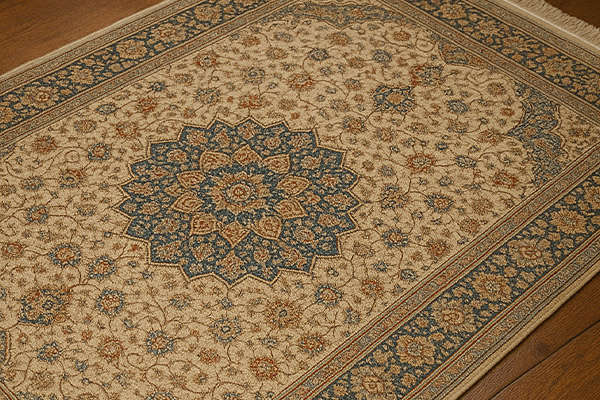
Weave structures define how yarns interact, how colors appear, and how textures form. By adjusting these structures, a designer can create carpets that feel softer, look richer, or become more cost-effective for mass production. Fine-weave designs, such as 1500-reed or 1000-reed carpets, are ideal for detailed Persian motifs. On the other hand, 500-reed structures are suitable for modern, bold designs that don’t require microscopic detail.
Correcting weave structures is equally important. Sometimes a design looks perfect on screen but loses clarity on the loom. Through technical adjustments such as altering pixel distribution, modifying color transitions, or redefining density the final product becomes clean, sharp, and true to the original concept.
This technical knowledge allows designers to collaborate effectively with production teams, ensuring that each design performs well not only visually but also technically.
Conclusion
A strong understanding of weave structures transforms good designs into high-quality carpets that match market expectations and production realities.